






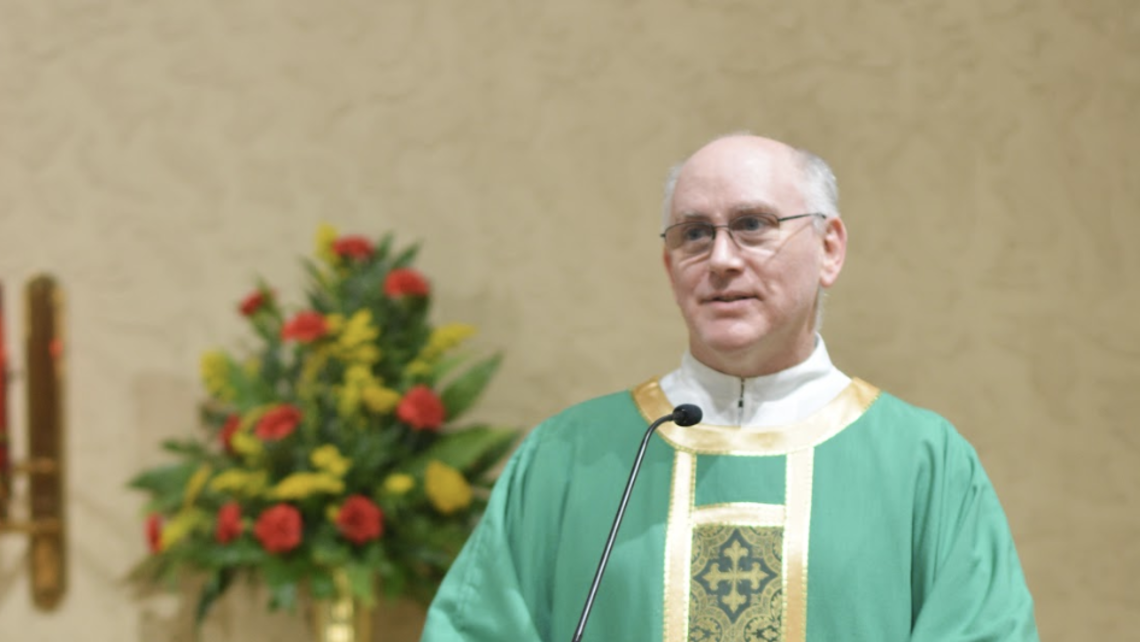
Third Sunday of Easter Cycle A
Acts 2:14, 22-28; 1 Peter 1:17-21; Luke 24:13-35
There is a famous exchange made in the children's book Alice in Wonderland by Lewis Carroll. About halfway through her adventure, Alice is lost, and finds the Cheshire Cat. Her exchange with it goes like this:
“Cheshire Puss, ... would you tell me, please, which way I ought to go from here?”
“That depends a good deal on where you want to get to,” said the Cat.
“I don’t much care where —” said Alice.
“Then it doesn’t matter which way you go,” said the Cat.
“— so long as I get somewhere,” Alice added as an explanation.
“Oh, you’re sure to do that,” said the Cat, “if you only walk long enough.”
[ https://www.gutenberg.org/files/11/11-h/11-h.htm#:~:text=%E2%80%9CThen%2... ]
We also have the common adage which comes from this same idea: “If you don't know where you are going, any road will take you there.” This came to mind as I read the Gospel reading today. We find two people leaving Jerusalem, going to a place called Emmaus. They seem disappointed and confused, debating about what has just happened in Jerusalem, to a man that they were disciples of. Are they returning to their hometown, believing that the ministry of Jesus is over? Was their faith so shaken that they don't feel that they need to wait to see if the predictions of a resurrection come true? Luke leaves the motivation of these two unstated but we, from our own experience, can fill in the details. Their lives have experienced a radical change and they are gong somewhere to figure out what happens next. I think it is interesting fact that, even today, no one knows for sure where Emmaus is. Oh, several places in Palestine claim for themselves the title, but scholars don't have enough evidence, really any evidence at all, to sift through the various claims. We can push an analogy too far but you get the point: where are these guys headed? Do they really know themselves?
So the question before us today is this: do we know where we are headed? There is a famous quote by Mark Twain: “The two most important days in your life are the day you are born and the day you find out why.” [ https://www.goodreads.com/quotes/505050-the-two-most-important-days-in-y... ] What are our goals in life? What part does God play in this understanding of where we want our life to go? Does our understanding of the incarnation, the death, and the resurrection of Jesus Christ bear any part of that understanding?
One important thing to notice in the Gospel is that Jesus was walking with them on their way to wherever they were going. They were not aware of it until later, but he was there, helping them understand many things. Jesus promises us that he will be with us as well. He gave us his Holy Spirit to help guide us as we figure our way in this world. So: how do we take advantage of this?
I think that sometimes we need to go to fundamentals, as we do in our Alpha course. Even great athletes work on fundamentals even after they have achieved greatness. One thing that we discuss is prayer, and what it is. I remind people that prayer is simply communication, a conversation. In my OCIA class, I stress that prayer is not necessarily worship. Prayer to God can certainly be worship, but it can be other things, such as thankfulness, asking for something, or just contemplation. As Catholics we can pray to the saints, such as our patron saint or the Virgin Mary, or a a deceased love one we feel is in heaven, but this is merely talking with them and asking for help; it is never worship. If it is worship, please stop right now – you are committing a grave sin. Prayer to God alone can be worship, as this is communicating our awe and wonder in his presense, but again prayer in its more general meaning is communication of any sort. And communication is a two-way street. Jesus left us his Spirit, but sometimes we're so busy talking to God about our problems or using well-known prayers that we don't stop to listen for an answer. We've all had a boss or a friend who was a bad listener, who never really heard what you said, who only waited for you to stop talking so they could again start talking about themselves. So here's a tough question: are we bad listeners with God?
I met last weekend with some parents of children in our faith formation program. One of the Alpha videos discussed how God guides us down the road of life. The video discussed five ways that God speaks to us: through the scriptures, through his Holy Spirit dwelling in us, through the community of other christians, through common sense, and by providential signs. On the road to Emmaus, the risen Jesus uses several of these, and through the Holy Spirit uses all of them today in our lives. Are we listening? I challenged the parents that were there: how are you teaching your children to use God's guidance in helping to inform their decisions, especially as they grow up and start making decisions that will impact their whole lives? Will they use the false gods of money, power, popularity, prestige, or whatever, to make decisions at school, for a career, in chosing their dating or marriage partner, or will they listen to the will of God, who wants nothing but the best for them?
Of course it's easy to say we need to listen to God, but because God doesn't come right out and tell us, we question if the signs and promptings we think are from God are actually from him. And so Saint John tells us to test our decisions; in his first epistle, he writes: “Beloved, do not trust every spirit but test the spirits to see whether they belong to God, because many false prophets have gone out into the world” [1 John 4:1 NABRE]. Here are some tests that the Alpha course gives: Is it in line with the bible and church teachings, is it strenghtening and loving, do you feel peace about it. For instance, if it is not loving or doesn't bring peace to our soul, it cannot be from God.
Prayer is the first and the best way to have a conversation with God. We come to God with our troubles, our concerns, our appreciation, all the stuff we deal with and have trouble understanding. We even bring our anger – some people feel that you can't be angry with God, but there are many psalms in the Old Testament where people are angry with God. Those pslams are laments, and you can find them in other books as well. We bring all of this to God through prayer. But then we need to listen for the Spirit, for God's response. God answers our prayers – maybe not in the way we want, but he always answers them in some way – but we may not always understand what he is telling us. The two disciples on the way to Emmaus heard what Jesus was telling them, but they did not realize what he was saying until the “aha moment,” the breaking of the bread. What will be our breaking-of-the-bread moment to what God is telling us to do in our lives? It might be in the breaking of the bread at our Eucharistic table here at Mass. It might be in Eucharistic adoration, when we silence our mind and heart to hear the promptings of the Holy Spirit. It might be in another way, but we will only hear it if we are listening for it. Whether it is the many life-changing decisions that young people make as they set out on a life of infinate possibilities or the more mundane decisions that we older people make whose lives are already on a fairly determined course, we always should be aware that Christ is on the road with us, always prompting us to continue our journey to making our lives a part of the kingdom of God on earth. If we don't sense God's presense, the question becomes: why not? And: what do we do to change that?
As we continue with our celebration of the Eucharist, may this sacrament bring us closer to understanding the will of God in our lives, his presence with us. May our prayer life truly be a two-way dialog with our God whom we've been taught to call Father and not a one-way monolog of a never-ending wish list of personal desires. Let us be aware that there are many worldly pundits, call them Cheshire cats, who will be there to point out roads to nowhere, but there is only one God who will walk with us on our earthly journey, guiding us to the kingdom of heaven.
Latest Homilies
March3, 2026
October is Respect Life Month, and today is Respect Life Sunday. Each year at this time, the bishops of the United States call us...Read more
March 3, 2026
Twenty-seventh Sunday in Ordinary Time Cycle A
Isaiah 5:1-7; Philippians 4:6-9; Matthew 21:33-43
The other day I ran across this...Read more
September 27, 2026
This has been an amazing week for the Catholic Church. We started by celebrating the feast day of Saint Matthew on Monday, the tax...Read more