






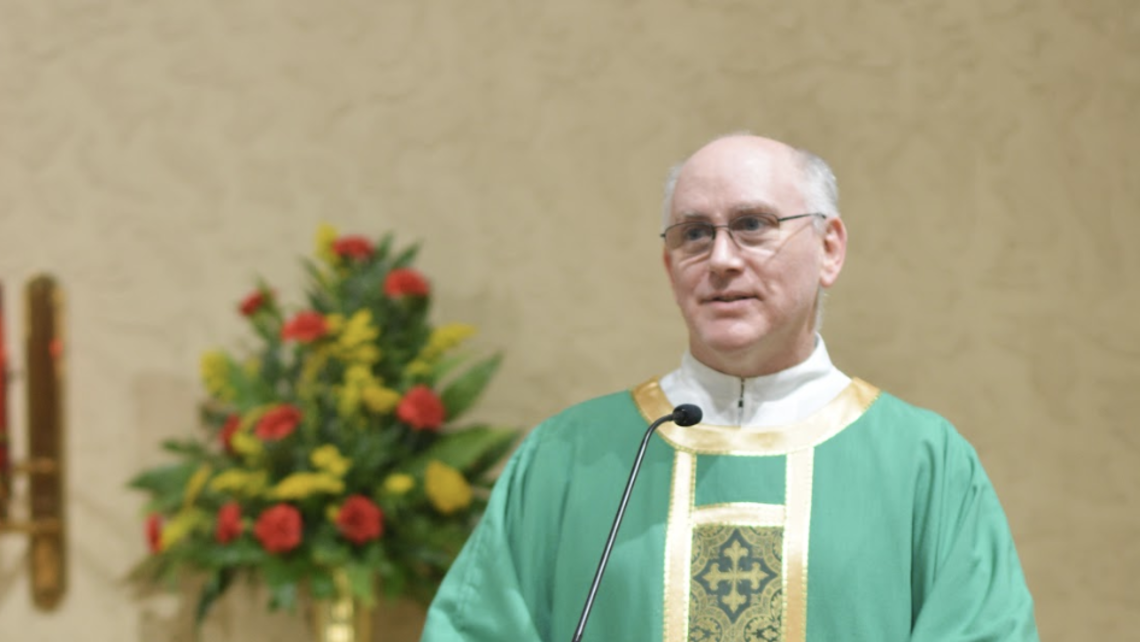
Twenty-sixth Sunday in Ordinary Time Cycle A
Ezekiel 18:25-28; Philippians 2:1-11; Matthew 21:28-32
Today's second reading is a very important passage in Christian theology. It raises subjects that are important for us as Christians to consider. Maybe more than just consider: to really think long and hard about what it means to us and our discipleship. It touches on an error of the Reformation. And it shows the fundamental desire of people who try to understand just what this person Jesus Christ was really trying to tell us, and in this case, tell us by showing us, what it means to be his follower.
First the historical error. When the Protestant Reformation occurred, they exposed real abuses by some in the Church, but unfortunately they used these to launch into remaking the Church to fit their own religious outlook. One of these errors was a concept called “sola scriptura”, or “by scripture only.” On its face it sounds reasonable, that we should be guided only by what is in scripture and not allow anything that is not written in these books to guide our theological judgments. Now had they said that we should be guided primarily by scripture, they would have been on safer ground, but then again they would only be stating our Church's position, both then and now. But they were dead set on throwing out some of the greatest traditions of the Church, and this set them on a problematic path.
There are several problems with “sola scriptura,” the most obvious being that it is self-contradictory. They would adopt a teaching that says you must accept no teaching outside of scripture, a teaching that is itself not in scripture. They have started a brand new tradition. And moreover, on a practical level, would a reasonable person assume that the New Testament captured everything that happened of importance in the life of Jesus and the early Church? Of course not. The Evangelist John tells us specifically that many things that Jesus did or said are not in his gospel [John 20:30], but that he picked the ones that he did as being sufficient to have us believe. A reasonable person would conclude that a public ministry that lasted several years would include many more things that are not written in the books and letters that form the New Testament. So the Church has maintained a small but important number of these traditions. They have been held from the very earliest times of the Church, by those who knew Jesus himself or were the first generations of Christians who heard them first-hand. We have a good example of this in today's Second Reading.
Saint Paul is writing to the church that he established in the city of Philippi, the first Christian church in Europe. He is writing in the year 55 or 56; in other words, a little more than 20 years after the death and resurrection of Jesus. Paul never knew Jesus during his lifetime, and only became a Christian after encountering him on the road to Damascus some four to seven years after his ascension to heaven. So all of what Paul knew of Jesus came from oral traditions handed down to him, none of the gospels having yet been written. And he is relaying one of them in this letter. Scholars who study the bible believe that the whole second half of the Second Reading is an early Christian hymn. If you were following in the missal, you would have noticed that the first half is in prose format, but then it switches to look like verses of a poem, the biblical scholars' way of indicating this, a hymn being a sung poem. It has a title that has been given it: The Philippian Christ Hymn. So we see Saint Paul passing on a hymn that some of the earliest Christians wrote, ones that knew Jesus, were his disciples, lived during and were touched directly in his ministry. So this passage is very important. The early Christians were trying hard to understand the meaning of Jesus' ministry, his crucifixion, his resurrection. So this hymn encapsulates one of the fundamental lessons that they came up with. They understood that it has important ramifications in their lives, and so too in our lives. We should also struggle with this as they did.
Jesus Christ, who is God, became a human, and more than that, a poor human, from a poor family, from a poor region of a poor country. And while human, he emptied himself of all that separates us from God: our pride, our envy, our need to possess stuff, our need to control others. He emptied himself of all of this, accepted his fate, and in so doing became closer to God. He is teaching us a fundamental truth of how God made us, a truth that is not evident, is in fact counter-intuitive, and he does this by showing us with his own life. He is teaching us that we come closer to God by emptying ourselves of all that we struggle to obtain on earth, because it turns out it actually bogs us down and takes us farther away from God. We can only be filled with God's graces when we empty ourselves and make room for them. The first Christians, gathering together after his earthly ministry, distilled this simple but important message into a hymn that they could sing in their weekly gatherings, helping to teach it to the new Christian converts like Paul as well as the younger generations. Saint Paul knew it was so important that he passes it on as well, as here, to the Philippians, and hence this tradition did enter into scripture, unlike some other letters and writings that have been lost. He passes it on today to us. The question then is: what do we do with it?
We here today should want to get closer to God, to become God-like in preparation for a fuller existence that is heaven. We all know ways that our human faults, the deadly sins like envy, greed, pride, and the rest, crowd out our ability to get closer to God, to be a better person, to fulfill the graces of our baptism. We know this, and yet we say: maybe tomorrow. We come weekly to Mass to sing hymns and prayers like this one so that we keep it in front of us. Maybe this is the week that we say: let's get started. And if we've made a good start, maybe this is the week we say: let's find another way to empty ourselves. But we need to keep on trying.
One particular way that we are called to examine this is during today's Day of Prayer for the National Migration Week that the US Conference of Catholic Bishops has been observing for the last 25 years. Pope Leo has made an appeal to the faithful this year, especially concerning young migrants. He said: "Minors are the most vulnerable group within the global movements of migration. They are concrete faces, who have unique stories, and call on our conscience. Every year, millions of children and adolescents are forced to leave their homeland because of war, poverty, violence, environmental disasters and other tragedies. Sadly, their number continues to grow." So one particular challenge to us today is: how do we empty ourselves of our preconceived notions about this problem, the political or ideological notions that we have carried? How did Jesus himself, a migrant to Egypt fleeing Herod, feel as a child immigrant? How do we empty ourselves and look at the face of our neighbor and become God-like, Christ-like, responding in a way that brings our world closer to the Kingdom of Heaven? This is not easy, yet we are called to do whatever we can to help, and thus be exalted by the Father as was Christ on the cross. Maybe this is the week that we do something to help.
As we continue with our Mass, may the graces we receive in the Eucharist find us empty of the things that would prevent these graces from actually becoming effective in our lives. May all the traditions of our Church, whether in scripture or not, help to bring us closer to God. Then we will be like the first Christians, working with the Holy Spirit, and conclude: yes, that is what Jesus said, yes, that is what Jesus did, and now, yes, we too need to respond faithfully in our own lives.
Latest Homilies
July 5, 2026
Today the scripture readings focus on rejoicing and praising our King and God, the Spirit working within us, and learning about our relationship with...Read more
July 5, 2026
Fourteenth Sunday in Ordinary Time Cycle A
Zechariah 9:9-10; Romans 8:9, 11-13; Matthew 11:25-30
A few years ago I heard...Read more
June 7, 2026
Two weeks ago, we celebrated Pentecost – the final day of the Easter season, the coming of the Holy Spirit, the Advocate, that Jesus...Read more