






Fifth Sunday of Easter Cycle A
Acts 6:1-7; 1 Peter 2:4-9; John 14:1-12
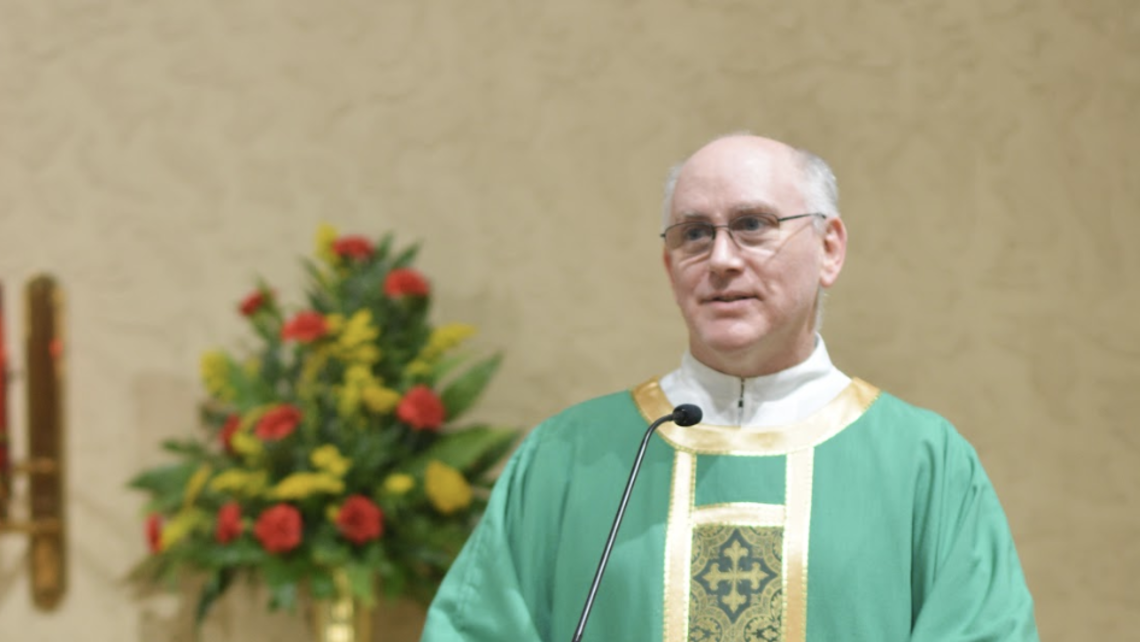
After Mass a while back, I was greeting people at the back of church as I usually do. A young boy came to me and gave me a dollar. I thanked him, and said that his generosity would be put to good use by the church to help others. The boy then said that, no, this wasn't for the church; it was for me. I thanked him again, but I had to ask him why he was giving me this gift. He told me that he had been taught to help those in need, and his father had told him that I was one of the poorest preachers he'd run across.
Well, you're stuck with me again. And why? I'm a deacon, and deacons preach occasionally. And this is on my mind today because we read in the First Reading the account that many, including our Church, believe to be the ordination of the first Christian deacons. This reading is read at all deacon ordinations. We have the story of the apostles, whose role has been perpetuated down to us in the bishops of our Church, saying that they need help in carrying out the works of charity and service to the first Christian communities. They laid hands on seven men, which was how the Jewish ordained their clergy, and how we also ordain ours. I was ordained when Bishop Guglielmone, who in the apostolic tradition is a successor to the original apostles, placed his hands on my head, along with other vows and gestures, placing me in the tradition of Stephen and Phillip and the other five that I have trouble pronouncing their names.
Deacons have a specific role within the Church. We are considered clergy, an ordained minister. All priests are also ordained to the diaconate prior to their priestly ordination, although they are considered transitional deacons, whereas I'm a permanent deacon who will not be ordained to the priesthood. As outlined in the Second Vatican Council document that brought into existence the permanent diaconate, Lumen gentium, deacons have three specific services: that “of the liturgy, of the word, and of charity to the people of God” [ Lumen gentium, 29 https://www.vatican.va/archive/hist_councils/ii_vatican_council/document... ]. The name deacon comes from the Greek word diakonia, which means service or ministry. Diakonia is in the original Greek used by Luke when he wrote today's first reading: the first deacons were ordained for service to the Hellenist members of the Christian community in Jerusalem. Today, deacons serve at the table of God, the altar, we serve at Mass, we preach, we proclaim the Gospel, and we can officiate at weddings and funerals, as well as baptize children. So deacons commit themselves to a life of service to the Church, but as we are reminded in the Gospel reading, we are all called to Christian service, or as Jesus told us, “whoever believes in me will do the works that I do …” [John 14:12 NABRE].
Service is then the theme that we see today. And we can look on the great deacons in the history of the Church for guidance. Saint Stephen, one of the seven that were ordained in the First Reading, the beginning of the sixth chapter of Acts of the Apostles, is under fire from the Jewish leaders for his proclamation of the gospel at the end of that same chapter, and by chapter seven, has been killed by those leaders after making a fearless public testimonial, becoming the first Christian martyr. We have Saint Lawrence, the man made archdeacon by Pope Sixtus II, in charge of all the treasure in the cathedral in Rome. Then Roman Emperor Valerian, in the year 258, ordered the death of clerics and put to death the pope and, then six days later, Lawrence. The story that captured attention then and now is this: when the Roman authorities ordered Lawrence to hand over the treasures that were hidden in the cathedral, he returned to them bringing a large group of poor people, telling them that these were the true treasures of the Church. And one more, my favorite deacon saint: Saint Francis. The history is murky on this and there are no records, but it appears that Francis was ordained a deacon, as evidenced by the fact that he preached in churches, which would require him to reach the level of clergy. However, apparently he was so busy doing all the things that made him famous that he never got around to being ordained to the priesthood. Now there are historians who argue both for and against this, but as for me, I'm going with it: Saint Francis was a deacon. And as far as service goes, it's hard to be a better example than Francis.
Now being a deacon is not the only way to serve, nor is the priesthood. It would be good if we had more deacons, and if you are a man over 35 who is already very active in ministry in the Church and feel a calling by God to serve in leadership role, you should consider it and talk with the pastor. Deacons are called to serve not as full-time clergy but as volunteers who help out in church in addition to their responsibilities to their wife, family, and occupation, working generally outside of the church, in my case, as an engineer and manager. If you are an unmarried person who feels a calling to serve God and the church as a vocational calling, you should consider the priesthood for men or a religious order for both men and women, or a lay position within the church as a staff member of the parish.
Many people do not feel this call for participation in the leadership of our parish. However, service to the Church, that is to say, being an active member of the Christian community, is not optional if we are to do as Jesus did. Although there are many accounts of Jesus going to the synagogue or the temple, he expected more of himself and his disciples than mere sabbath attendance and living a good-enough life. We are blessed at Saint James to have many people who engage in the many ministries here, and also help out in charitable works outside of the Church. It is always a profitable exercise to periodically reassess how you devote your time, talent, and treasure as your life evolves, and this is as good a time as any. Especially on this feast of Saint James the Younger, when we celebrate the feast day of the patron saint of our parish, we focus both on who we are as a community as well as where we want to go. Let's use this opportunity to reflect on how we change and grow as Christians in a world that so desperately needs the Christian message of faith, hope, and love. It desperately need you and I to live that message out each and every day.
As we continue with the Mass, may the communion we receive bring us into communion with our parish and our larger social community. We look to the example of our great patron, Saint James the Younger, the first bishop of Jerusalem, to build a community of faith like those of the first Christian communities. And may we also look to the example of the great deacons that have gone before, leading the Church to greater heights as we contemplate how we also look at our role in building on their great success.
Latest Homilies
July 5, 2026
Today the scripture readings focus on rejoicing and praising our King and God, the Spirit working within us, and learning about our relationship with...Read more
July 5, 2026
Fourteenth Sunday in Ordinary Time Cycle A
Zechariah 9:9-10; Romans 8:9, 11-13; Matthew 11:25-30
A few years ago I heard...Read more
June 7, 2026
Two weeks ago, we celebrated Pentecost – the final day of the Easter season, the coming of the Holy Spirit, the Advocate, that Jesus...Read more